Feed
Grass, hay, silage, grain or mixed rations depending on the animal and the game.
Animals add a steady rhythm to a virtual farm, but they also need daily attention. These tips cover feed, housing and production so your livestock side runs smoothly.
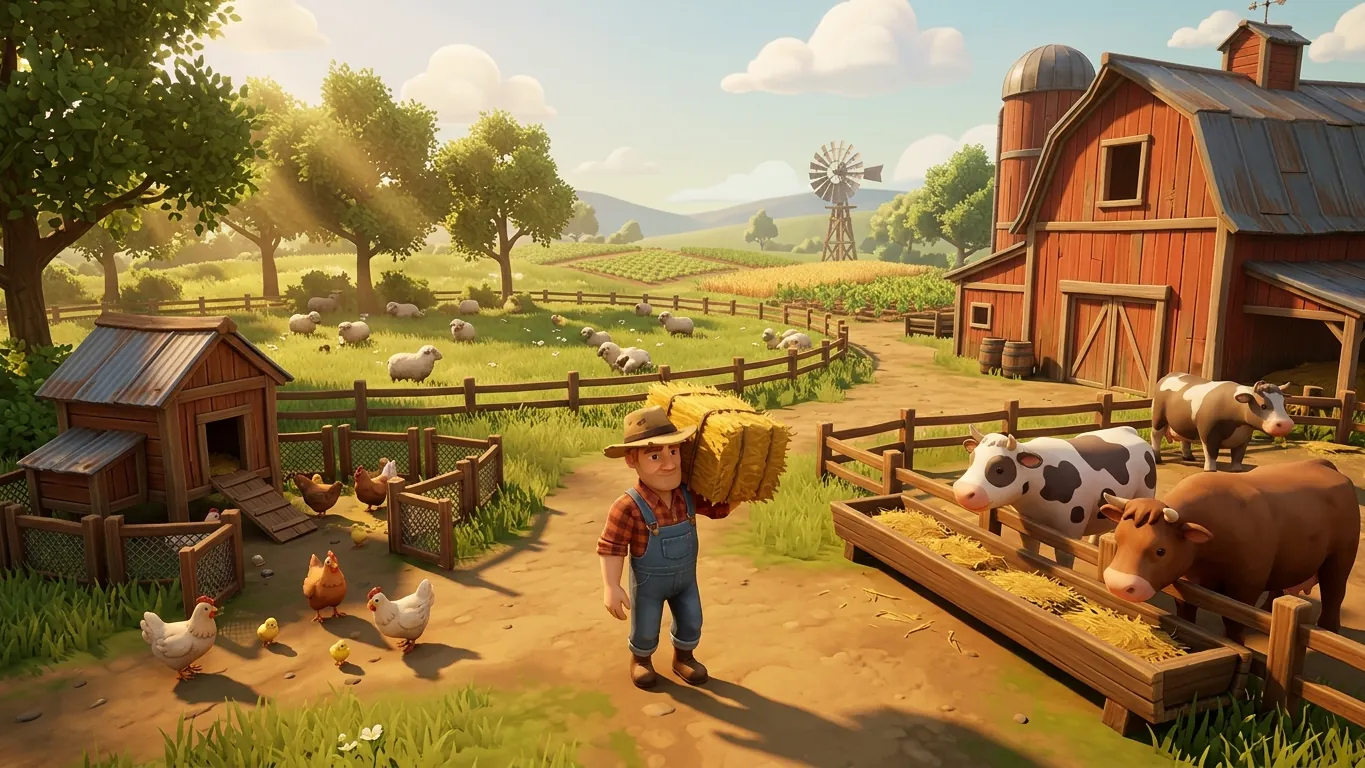
Crop farming in most games follows a seasonal cycle, with busy periods followed by quiet ones. Animals change that. They produce goods such as milk, eggs or wool on a regular basis, which can smooth out your income between harvests. They also create by-products like manure that can fertilize your fields.
The trade-off is ongoing work. Animals usually need feed, water and sometimes bedding, and neglecting them may reduce productivity. Before you buy your first herd, make sure you have time and resources to look after it.
Chickens and sheep are often easier to manage than cattle or pigs in farming games. They may need fewer feed types and less equipment. Starting small lets you learn how your game handles feeding, cleaning and selling products before scaling up.
Check the capacity of each building or pasture. Overcrowding, if modeled, can reduce output, and buying more animals than you can feed quickly drains your storage.
Most games with livestock track some combination of these needs.
Grass, hay, silage, grain or mixed rations depending on the animal and the game.
Some games require you to supply water, while others handle it automatically.
Straw may be needed for comfort and can affect productivity and manure output.
Some games track cleanliness and expect you to clear manure or slurry regularly.
Pens and pastures have limits, and staying within them helps keep animals productive.
The most satisfying livestock setups connect directly to your fields. Grow grass to make hay or silage, grow grain for feed, collect straw for bedding and spread manure back onto the fields. This loop reduces the amount you need to buy and gives your farm a sense of balance.
Some games also offer feed mixing, where combining several ingredients into a ration increases productivity. It takes planning and storage space, but it can be a rewarding next step once your basic setup runs reliably.
Livestock works best with a routine. Pick a moment in your play session, such as the start of each in-game day, to check feed levels, collect products and clear out manure. Regular checks prevent problems from building up.
Where your game allows, automate the repetitive parts. Feeding robots, automatic water supply and hired workers cost money, but they free you to focus on fields and planning. If you play with friends, assigning one person to livestock is another good way to share the load.
Animals bring life to a farm. With a little planning, they can become a reliable part of your operation rather than a daily chore.
 Cozy or realistic: which farming game suits you?
An opinion piece comparing cozy farming games and realistic farming simulators, what each does well and how to decide which style fits your free time.
Read more
 Running a co-op farm with friends
A guide to playing farming games in co-op: dividing roles, sharing money, planning together and keeping a shared virtual farm fun for everyone involved.
Read more
Why slow outdoor games fit a busy schedule
An opinion piece on why fishing and farming games suit adults with busy lives, plus practical ideas for fitting relaxed gaming sessions into your week.
Read more