Field manager
Handles soil preparation, sowing and fertilizing, and keeps track of crop rotation.
Farming games can be even more enjoyable when you share the work. This guide covers roles, planning and communication for a smooth co-op farm.
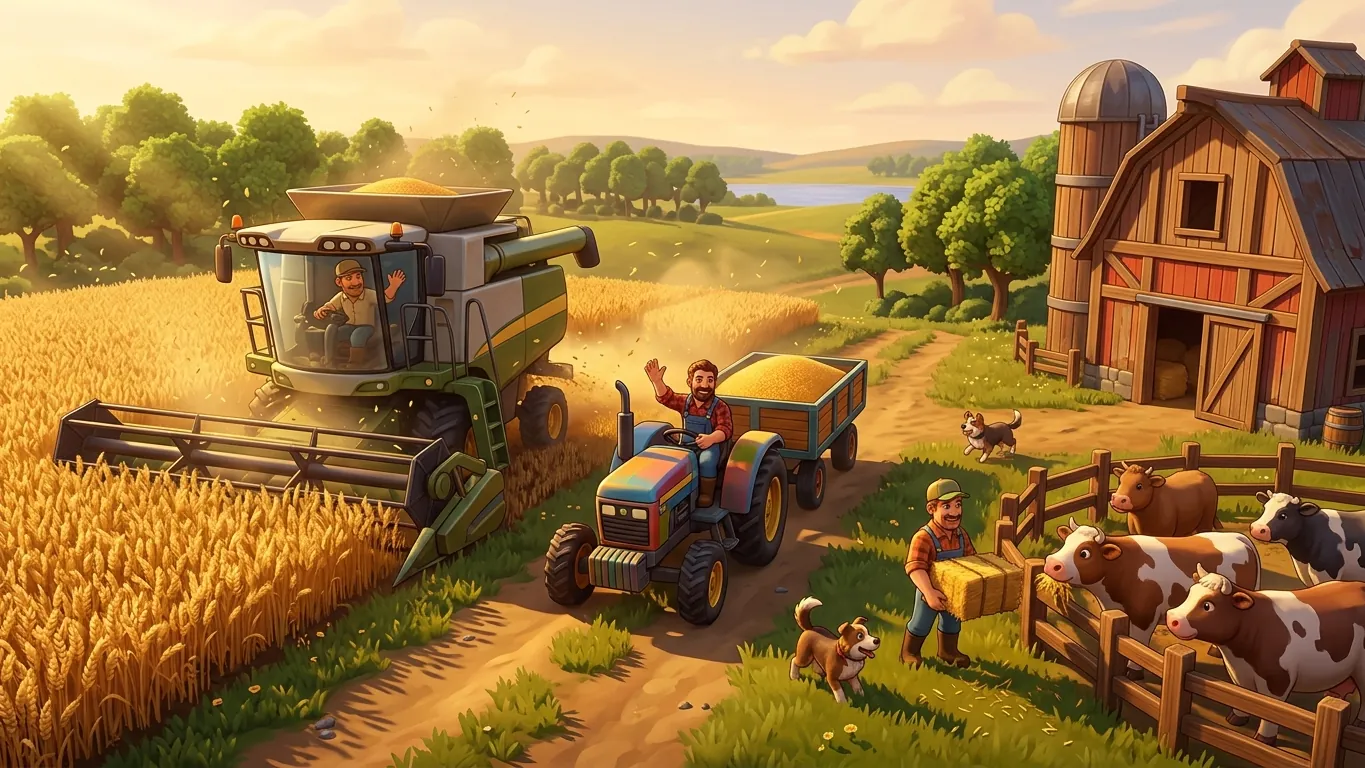
Farming games naturally contain many parallel jobs. While one player harvests, another can haul grain, a third can prepare the next field and someone else can look after animals. In co-op, these jobs happen at the same time, which makes the farm feel alive and lets you take on bigger projects than you could alone.
Co-op also turns a solitary hobby into a social one. Some of the most memorable moments in farming games come from coordinating a busy harvest with friends late into an evening.
Before planting a single seed, talk through a few questions. What kind of farm do you want to build? Is the goal relaxation, efficiency or a bit of both? How will you handle money, and who can make big purchases? Some games offer permission settings for spending and selling, which can prevent awkward surprises.
Also agree on game settings. Difficulty, soil mechanics and economy options affect everyone, so decide together rather than leaving it to one person.
Assigning loose roles keeps everyone busy and reduces overlap.
Handles soil preparation, sowing and fertilizing, and keeps track of crop rotation.
Runs the combine or hauls crops to storage and selling points during busy windows.
Looks after feed, bedding and product collection for the animals.
Watches prices, keeps notes on spending and suggests the next purchase.
Keeps machinery maintained and repaired so nothing breaks down mid-job.
The biggest source of friction in co-op farming is two players doing the same job or undoing each other's work. A quick chat at the start of each session solves most of this. Agree on today's priorities, who is doing what and which fields are off limits.
Keep a shared note outside the game with field numbers, current crops and planned next steps. It helps players who join late or miss a session catch up quickly without asking a dozen questions. Roles do not need to be fixed; rotating them now and then keeps the game interesting and helps everyone learn the full farm.
A co-op farm should feel like a shared hobby, not a second job. If someone wants to spend an evening fishing in the lake or testing a new machine on an empty field, let them. Not every session has to be about efficiency.
Celebrate small milestones together, such as the first harvest, the first new tractor or finishing a production building. These moments give the group a sense of shared progress.
Finally, be patient with newer players. Farming games have a learning curve, and teaching a friend how to calibrate a seeder or back up a trailer is part of the experience. A relaxed attitude keeps the group together season after season.
 Your first season in a farming simulator
A practical guide to your first season in a farming simulator: choosing a starting field, managing money, picking crops and avoiding common early mistakes.
Read more
 Fishing game basics: rods, lines, bait and lures
Learn the basics of tackle in fishing games: how rods, reels, lines, bait and lures work together and how to choose a setup for the fish you are after.
Read more