Natural bait
Worms, insects, dough or small fish usually attract a wide range of species and work well while fishing still with a float or on the bottom.
Fishing games reward players who understand their gear. This article explains how rods, reels, lines, bait and lures work together so you can build a setup that fits the fish you want.
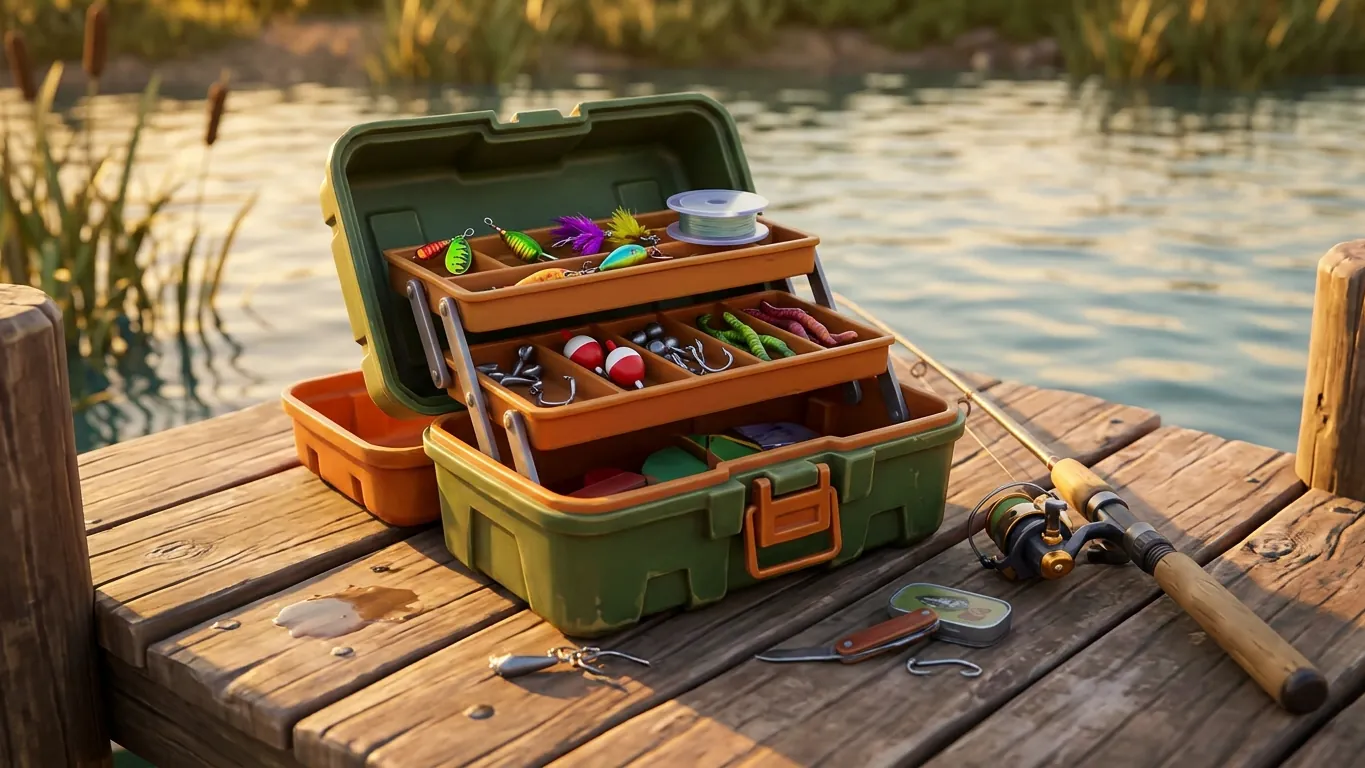
In many fishing games, success depends less on quick reactions and more on preparation. The fish in the water have preferences: depth, food, time of day and the kind of movement that catches their attention. Your tackle is how you meet those preferences. A well-matched setup puts the right bait at the right depth and holds up when a strong fish pulls back.
Realistic fishing simulators tend to model tackle in detail, while more casual games simplify it. Either way, the basic logic is similar, and understanding it helps you make sense of whatever options your game offers.
Rods usually differ in length, power and action. Longer rods cast farther, which helps on wide lakes or from the shore. Power describes how much force the rod can handle; light rods suit small fish and delicate presentations, while heavy rods are built for large, strong species. Action describes where the rod bends, which affects sensitivity and hook setting.
Reels in games commonly come as spinning reels, baitcasting reels or simple float setups. Pay attention to drag, if your game includes it. Drag lets line slip out under pressure so a strong fish does not snap it. Setting drag too tight risks breaking the line, while setting it too loose can make it hard to land the fish.
Line strength is often the deciding factor in whether you land a big catch. Heavier line is stronger but may be more visible to fish in some games, which can reduce bites. Lighter line is less visible but breaks more easily. A good rule is to match line strength to the largest fish you realistically expect in that spot.
Hook size should match the mouth of the target fish and the size of your bait. A hook that is too large may scare off small fish, while one that is too small may not hold a larger fish. Many games show recommended ranges, so check item descriptions before heading out.
Most fishing games split offerings into natural bait and artificial lures. Each has a role.
Worms, insects, dough or small fish usually attract a wide range of species and work well while fishing still with a float or on the bottom.
Flashy lures that rotate or wobble, often effective for active predatory fish when retrieved steadily.
Flexible lures that imitate small fish or creatures and can be worked slowly near the bottom.
Lures that move on top of the water, often useful in calm conditions and at certain times of day.
Start with a versatile medium rod, a reliable reel and line of moderate strength. Pair it with a float and natural bait for a calm session on a pond or slow river. This setup catches a variety of common species and teaches you how bites look and feel in your game.
Once you know a location better, build a second setup for predators, with a spinning reel and a few different lures. Switching between the two lets you adapt when one approach stops working. Keep notes on what worked, where and at what time, because many games repeat behavior patterns that you can learn over several sessions.
Most importantly, change only one thing at a time when experimenting. If you swap rod, line and bait all at once, you will not know which change made the difference.
 Crop rotation and soil mechanics explained
An explainer on crop rotation, fertilizer, lime and soil mechanics in farming simulators, and how planning field use across seasons can support yields.
Read more
 Reading the water: where fish hide in fishing games
Tips for finding fish in fishing games: reading depth, structure, weather and time of day so you spend less time waiting and more time getting bites.
Read more
 Planning a machinery fleet in farming games
A guide to building a machinery fleet in farming simulators: what to buy first, when to upgrade, buying versus leasing and keeping equipment costs under control.
Read more