Planning a machinery fleet in farming games
Machinery is the biggest expense in most farming simulators. This guide explains how to grow your fleet step by step without leaving your farm short of cash.
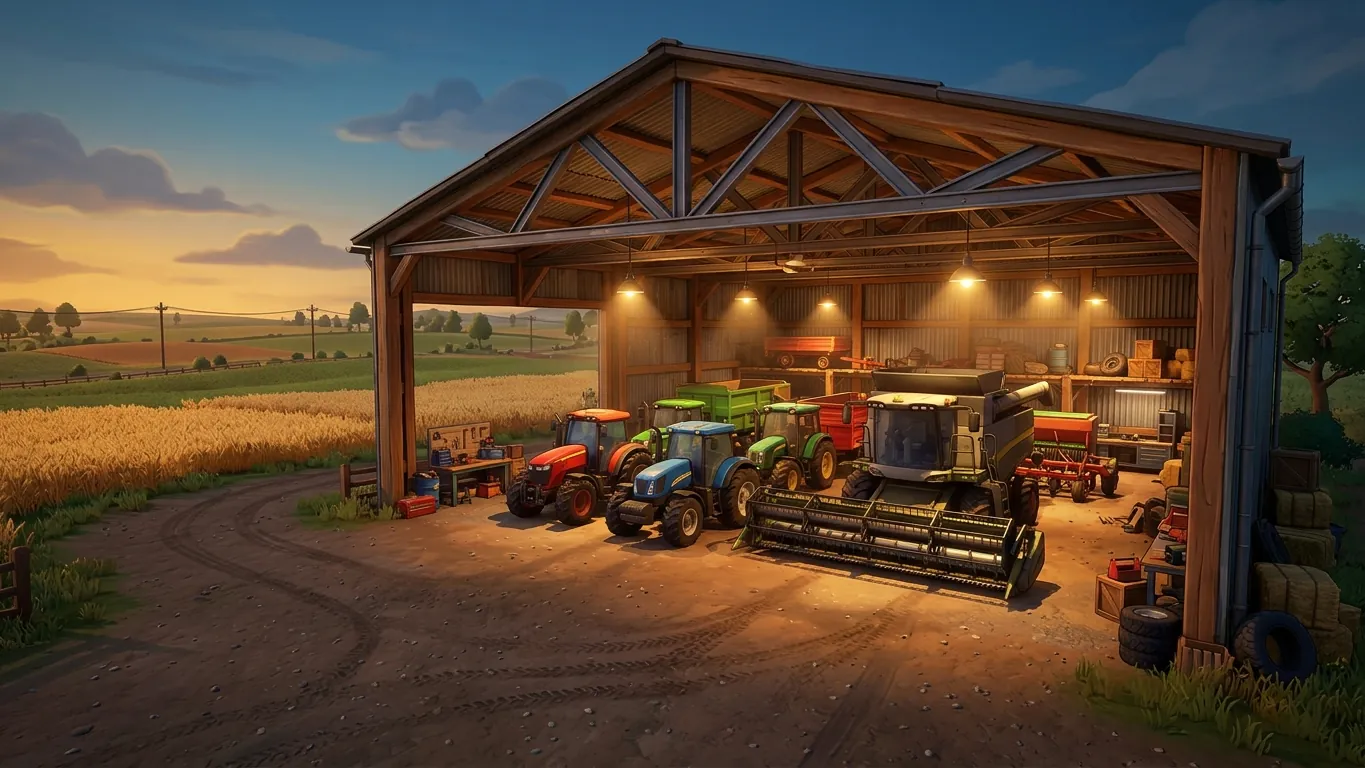
Think in jobs, not machines
Before buying anything, list the jobs your farm needs done each season: soil preparation, sowing, fertilizing, harvesting and transport. Then ask which machines cover those jobs. A single mid-sized tractor can often pull a cultivator, seeder, spreader and trailer at different times of year, which makes it more useful than a powerful tractor that sits idle most of the time.
This job-based view helps you avoid duplicate purchases and see where a new machine would actually save time.
What to buy first
Most players start with a reliable tractor, a cultivator, a seeder and a trailer. Harvesting is often the hardest job to cover early because combines are expensive. If your game offers leasing or contractors, use them for harvesting until your income can support a purchase.
Used equipment, if your game has a used market, can be a sensible option. Older machines may need more maintenance, but they let you expand capacity earlier. Compare the price, condition and operating cost before deciding.
Matching implement width and power
Wider implements cover fields faster, but they need more powerful tractors and may struggle on small, irregular fields. Narrow implements are cheaper and more flexible but take longer. The right balance depends on your field sizes and how much time you have during busy windows like sowing and harvest.
When you upgrade, try to upgrade in pairs. A bigger seeder without a tractor strong enough to pull it, or a bigger combine without enough trailer capacity to keep up, creates a bottleneck instead of solving one.
A step-by-step expansion path
This general path suits many farming games and can be adjusted to your map.
- 01
Cover the basics
Own one versatile tractor and core implements for preparing, sowing and transport.
- 02
Lease the expensive jobs
Use leasing or contractors for harvesting and other costly specialized work.
- 03
Buy your first harvester
Once income is steady, purchase a combine that matches your field sizes.
- 04
Remove bottlenecks
Add trailers, a second tractor or wider tools where work regularly piles up.
- 05
Specialize gradually
Add machines for specialized crops only when you are committed to growing them.
Keeping costs under control
Every machine you own may carry ongoing costs such as maintenance, repairs and fuel. Selling equipment you no longer use can free up money and space. Some games reduce resale value over time and with heavy use, so decide early whether a machine is a long-term part of your fleet or a temporary solution.
Review your fleet at the end of each in-game year. Ask which machines you used most, which sat idle and where you lost time. That review usually points clearly to your next sensible purchase.
A well-planned fleet is not the biggest one, but the one that gets your farm's work done on time while leaving enough money for seeds, fertilizer and growth.
Related articles
 Livestock tips for farming simulator players
Practical tips for keeping animals in farming games: feed, water, bedding, space and production chains, plus how to balance livestock with crop farming.
Read more
 Cozy or realistic: which farming game suits you?
An opinion piece comparing cozy farming games and realistic farming simulators, what each does well and how to decide which style fits your free time.
Read more
 Running a co-op farm with friends
A guide to playing farming games in co-op: dividing roles, sharing money, planning together and keeping a shared virtual farm fun for everyone involved.
Read more