Crop rotation and soil mechanics explained
Many farming simulators model soil health, fertilizer and crop rotation. This explainer covers how these systems usually work and how to plan around them.
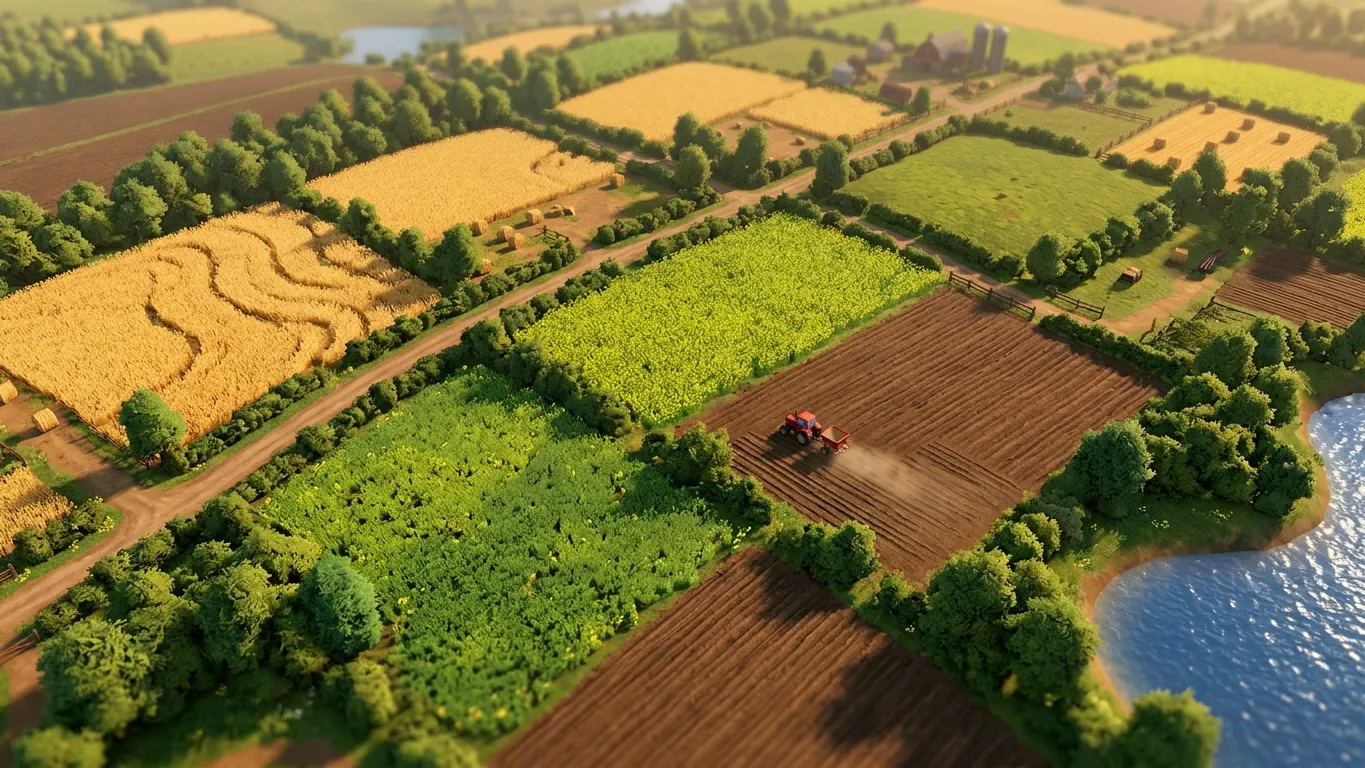
Why soil mechanics exist in farming games
Early farming games often treated a field as a simple container: plant seeds, wait, harvest. More detailed simulators now add layers inspired by real agriculture, such as nutrient levels, soil acidity, weeds, stones and compaction. These systems make the game more complex, but they also add meaningful choices. Two players with identical fields can get different results depending on how they manage the soil.
Not every game includes every mechanic, and many let you turn some of them off. Check your settings and in-game help to see which systems are active before planning around them.
Fertilizer and nutrient levels
Fertilizer is the most common soil mechanic. Games typically track how many times a field has been fertilized during a growing cycle, with each stage adding to the potential yield. Some simulators distinguish between solid fertilizer, liquid fertilizer, slurry and manure, which can all serve the same purpose.
If you keep livestock, manure and slurry offer a way to reuse farm by-products instead of buying fertilizer. This connects your animal side and crop side into a single loop, which is one of the more satisfying things to set up in a farm game.
How crop rotation works in games
Crop rotation means not planting the same crop on the same field season after season. In games that model it, growing the same crop repeatedly may lower the yield bonus, while following one crop with a suitable different one can provide a bonus. Some games also use cover crops or fallow periods to restore part of the field's potential.
The exact rules vary. Some games show a simple chart of which crops follow well, while others hide it in tooltips or help menus. It is worth spending a few minutes finding this information before planning your fields for the year.
Lime, weeds and other factors
Some simulators track soil acidity, which you correct by spreading lime every few seasons. Weeds may appear between sowing and harvest and reduce yield if left alone, so you might need a weeder or sprayer. Stones can damage equipment and require a stone picker, and heavy machines may compact soil, which some games correct through plowing or deep cultivation.
Each of these adds a job to your calendar. On a small farm you may handle them yourself. On a larger farm, hired workers or contractors can take over routine passes so you can focus on decisions.
A practical way to plan
A simple approach is to divide your fields into groups and give each group a rotation, for example a grain, then an oilseed or root crop, then another grain or a cover crop. Rotating groups rather than individual fields keeps your machinery needs predictable and makes harvest timing easier to manage.
Keep a basic log of what was planted where and when lime was last applied. The game may store this data, but a quick personal summary helps you think ahead. Over a few seasons, you will see which combinations suit your map, your equipment and your play style.
If soil mechanics feel overwhelming at first, turn some of them off and enable them one by one as you gain confidence. The goal is enjoyment, not perfection.
Related articles
 Reading the water: where fish hide in fishing games
Tips for finding fish in fishing games: reading depth, structure, weather and time of day so you spend less time waiting and more time getting bites.
Read more
 Planning a machinery fleet in farming games
A guide to building a machinery fleet in farming simulators: what to buy first, when to upgrade, buying versus leasing and keeping equipment costs under control.
Read more
 Livestock tips for farming simulator players
Practical tips for keeping animals in farming games: feed, water, bedding, space and production chains, plus how to balance livestock with crop farming.
Read more