Time of day
Early morning and evening are often more active periods, while some species feed at night.
Good tackle is only half the story. These tips explain how to read depth, structure, weather and time of day to find fish in virtual lakes and rivers.
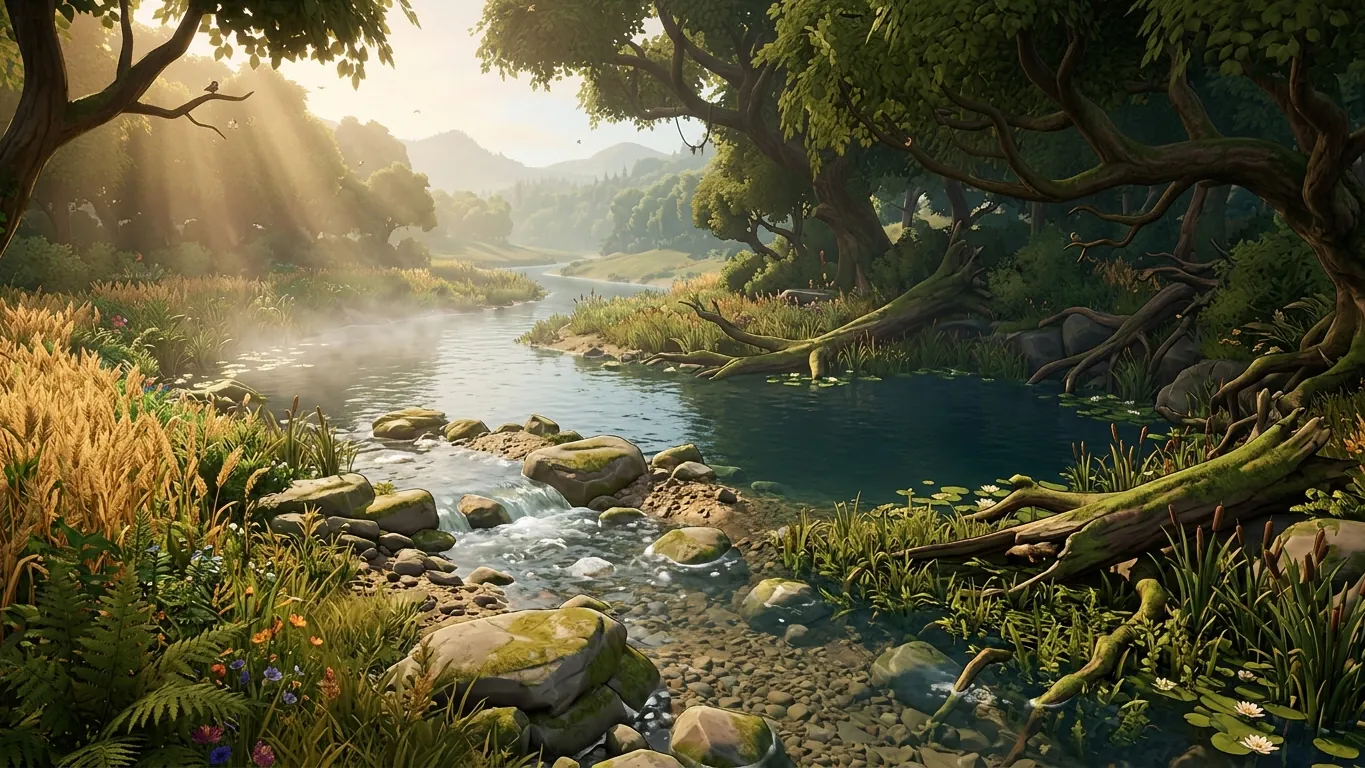
Many fishing games give fish behaviors based on real-world tendencies. They gather where food is plentiful, where they feel safe and where water conditions suit them. Learning to spot those places turns long, empty waits into productive sessions.
The details differ between games, but a few general principles hold up well across the genre. Treat them as starting points and adjust once you learn the specific habits of fish in your game.
Depth is often the most important factor. Some species prefer shallow, warm water, while others stay deeper, especially during bright midday hours. Drop-offs, where shallow water suddenly becomes deep, are classic places to search because fish can move between feeding areas and safety quickly.
If your game offers a depth map, sonar or a marker float, use it. Measure the depth around your spot before you start fishing so you know where your bait actually sits. Many players lose time fishing the wrong depth without realizing it.
Structure means anything that changes the underwater environment: rocks, fallen trees, weed beds, bridge pillars, piers and sunken objects. Predatory fish often wait near structure to ambush prey, while smaller fish shelter there for protection.
Cast close to structure rather than into open water, and expect occasional snags if your game models them. Weed edges are particularly productive in many games. Instead of throwing into the middle of thick weeds, work the boundary between weeds and open water.
These factors often influence fish activity in games that simulate them.
Early morning and evening are often more active periods, while some species feed at night.
Cloud cover, rain and wind can change how actively fish feed and how close to the surface they come.
In seasonal games, temperature can push fish shallower or deeper throughout the year.
In rivers, fish often hold just behind obstacles where they can rest out of the strongest flow.
If a spot gives you nothing after a reasonable time, move. Staying put for too long is one of the most common habits that slows progress in fishing games. Try a different depth first, then a different bait, and then a different location.
Keep a simple log of where, when and how you caught each species. Over a few sessions you will build your own map of productive spots for different conditions. That knowledge is personal, it grows with every trip and it makes the game feel more rewarding.
Finally, remember that patience is part of the fun. Fishing games are often at their best when you slow down, watch the water and enjoy the scenery between bites.
 Planning a machinery fleet in farming games
A guide to building a machinery fleet in farming simulators: what to buy first, when to upgrade, buying versus leasing and keeping equipment costs under control.
Read more
 Livestock tips for farming simulator players
Practical tips for keeping animals in farming games: feed, water, bedding, space and production chains, plus how to balance livestock with crop farming.
Read more
 Cozy or realistic: which farming game suits you?
An opinion piece comparing cozy farming games and realistic farming simulators, what each does well and how to decide which style fits your free time.
Read more